Physiology, Performance and Safety in Free Flight
The Free Flight Physiology Project is a multidisciplinary collaboration studying what actually happens to a pilot’s body during unpowered flight. Paragliding, hang gliding and speed flying place people in an environment that is cold, thin, physically exposed and cognitively demanding, often for hours at a time — and yet, until recently, almost nothing was measured about it. Our work brings together aviation medicine, exercise physiology, human factors and remote trauma care to fill that gap with real numbers gathered in the air rather than assumptions gathered on the ground.
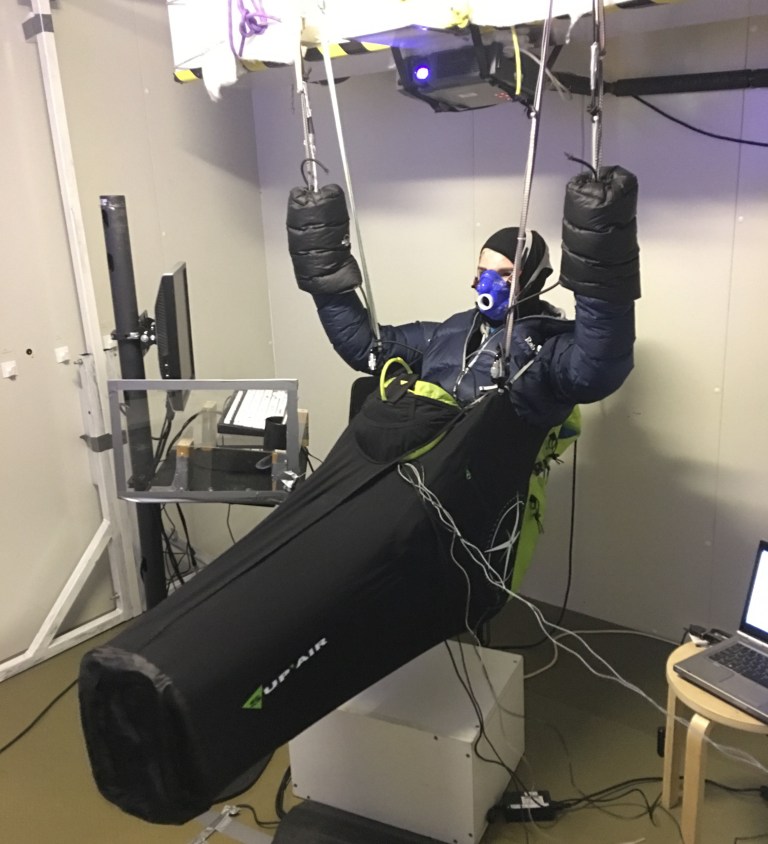
Everything we do starts from the same practical question: what limits a pilot, and what makes a pilot safer? Answering it means carrying laboratory-grade instruments into a very unlaboratory-like setting. We fly with portable metabolic analysers, continuous heart rate and respiratory monitoring, accelerometry and cockpit telemetry, then match those recordings against flight tracks, weather data and the pilot’s own account of the flight. The result is a growing, openly published picture of the demands of free flight — one that pilots, instructors, competition organisers and clinicians can all use.
What the Research Has Shown So Far
Phase I looked at oxygen consumption, heart rate, ventilation and G tolerance across cross-country and competition flying. The findings surprised us and many of the pilots involved. Heart rates run remarkably high — comparable with moderate to hard exercise — while the measured physical effort of flying is low. In other words, the load is not muscular; it is thermal, postural, hypoxic and, above all, psychological. Breathing tends to become fast and shallow rather than deep, which is exactly the pattern associated with anxiety and with poorer gas exchange at altitude. Accelerometry from collapses and rapid descents shows brief but genuine G loading, and cold and dehydration quietly erode judgement long before a pilot notices.
Phase II extends this into cognition: how attention, decision-making and situational awareness change over a long flight, and how they recover afterwards. Phase III turns to emergency parachutes — deployment forces, descent rates and the injury patterns that follow. Alongside each phase we publish the study limitations honestly, because small sample sizes and field conditions are part of the reality of this kind of research, and because pilots deserve to know how much weight a finding can carry.
From Data to Better Outcomes on the Hill
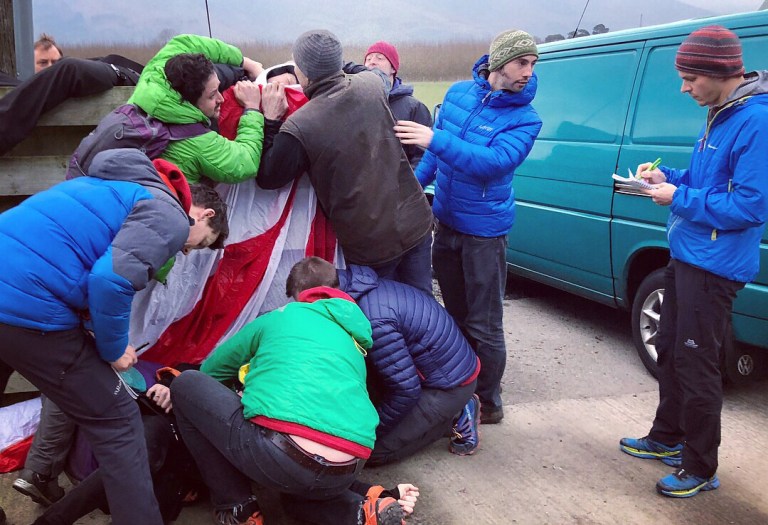
Research is only half of the project. Free flight accidents are frequently severe, frequently remote, and the first people on scene are almost always other pilots rather than medical professionals. That is why we run a dedicated extreme sports first aid and trauma management course built around the injuries our sports actually produce: spinal and pelvic trauma, lower limb fractures, major bleeding, airway compromise, and casualties who must be kept warm and protected from the environment for a long time before help arrives. Group dynamics, leadership and scene safety are taught as core clinical skills, not as afterthoughts, because a disorganised rescue harms people just as reliably as a missed injury does.
The same material is available here as a free, openly accessible set of key skills pages — scene safety, casualty assessment, opening the airway, controlling bleeding, binding the pelvis, lower limb injuries, pain management, environmental protection and the legal position of a bystander who helps. We also publish our peer-reviewed papers, podcasts and talks, and we keep a simple ultralight first aid kit list that has been designed by and for practitioners of extreme sports. Whether you are a researcher looking for collaborators, an instructor building a safety briefing, or a pilot who simply wants to understand what your body is doing at cloudbase, there is something here for you.